OECD Forecast: Austria's Economy Recovers Slowly

The OECD expects GDP growth of 1.7 percent in the OECD countries for both 2023 and 2024. A growth of 1.8 percent is forecast for 2027. The Eurozone is expected to grow by 1.2 percent in 2024 and 1.4 percent in 2025. For the G-20 countries, the OECD expects growth of 1.7 percent in 2026 and 1.8 percent in 2027. Globally, economic growth of 2.9 percent for 2026 and 3.1 percent for 2027 is predicted.
OECD Expects Increase in Private Consumption in Austria
The OECD expects that private household consumption in Austria will increase in the coming two years. Contributing to this will be a declining inflation, a robust labor market, and lower savings. And low interest rates are expected to lead to more investments, according to the OECD. Inflation is likely to approach the targeted two percent mark by the end of 2027.
The economic recovery is being slowed by ongoing fiscal consolidation. The deficit is to be reduced to below 3 percent by 2028. However, the consolidation will slightly burden demand, the OECD speculates in its outlook. Finally, Austria must respond to challenges such as an aging population, climate change, and rising defense expenditures, according to the economists. Reforms of public finances are necessary for this, such as in the pension system or social benefits.
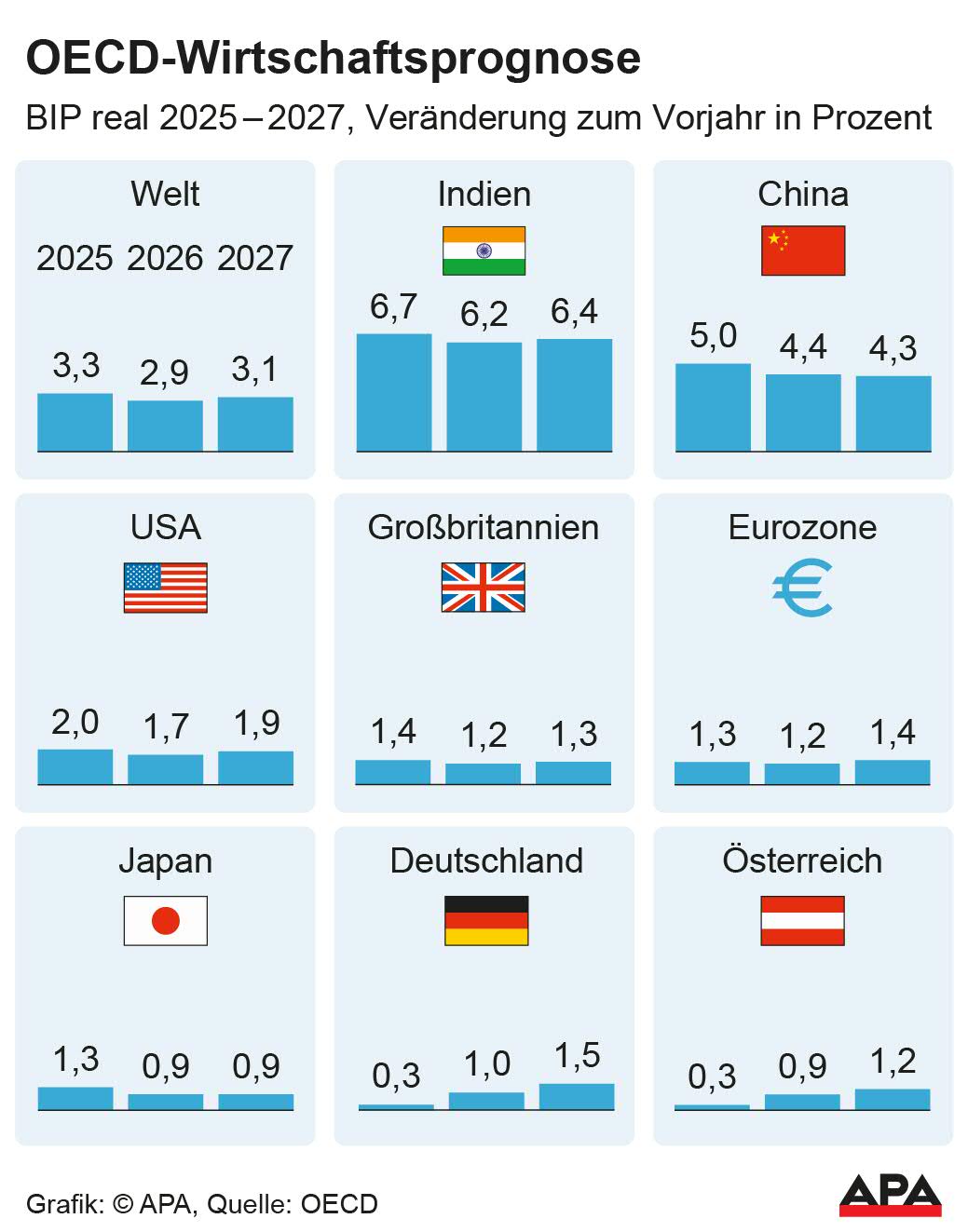
OECD Advocates Targeted Investments to Stimulate the Economy
The weaker economy in Europe and further tariff shocks could also slow the recovery. However, the OECD also advocates for targeted public investments to promote business dynamics. These would strengthen resilience. To restore the competitiveness of energy-intensive industries, energy policy measures should be implemented. According to the OECD, the expansion of the broadband network, the relaxation of infrastructure regulations, and the introduction of investment incentives could stimulate medium-term growth. In its outlook, the OECD suggests, for example, the relaxation of land use regulations and the removal of other restrictions in the housing market. But a more integrated and competitive energy supply market could also lead to lower energy prices.
Around two-thirds of Austria's trade is with the European Union, the economists note. However, the country is deeply integrated into regional value chains. Therefore, US tariffs on EU goods should significantly affect Austria's exports. About 21 percent of Austrian exports are intermediate goods for the exports of foreign partners. However, Austria is expected to benefit from higher government spending in Germany in 2027. High energy prices are another problem for the Austrian economy: electricity prices for industrial use are about 40 percent above the level before the Ukraine war.
(APA/Red)
This article has been automatically translated, read the original article here.
Du hast einen Hinweis für uns? Oder einen Insider-Tipp, was bei dir in der Gegend gerade passiert? Dann melde dich bei uns, damit wir darüber berichten können.
Wir gehen allen Hinweisen nach, die wir erhalten. Und damit wir schon einen Vorgeschmack und einen guten Überblick bekommen, freuen wir uns über Fotos, Videos oder Texte. Einfach das Formular unten ausfüllen und schon landet dein Tipp bei uns in der Redaktion.
Alternativ kannst du uns direkt über WhatsApp kontaktieren: Zum WhatsApp Chat
Herzlichen Dank für deine Zusendung.