Cheaper Electricity, Expensive Gas: What Will Change in 2026

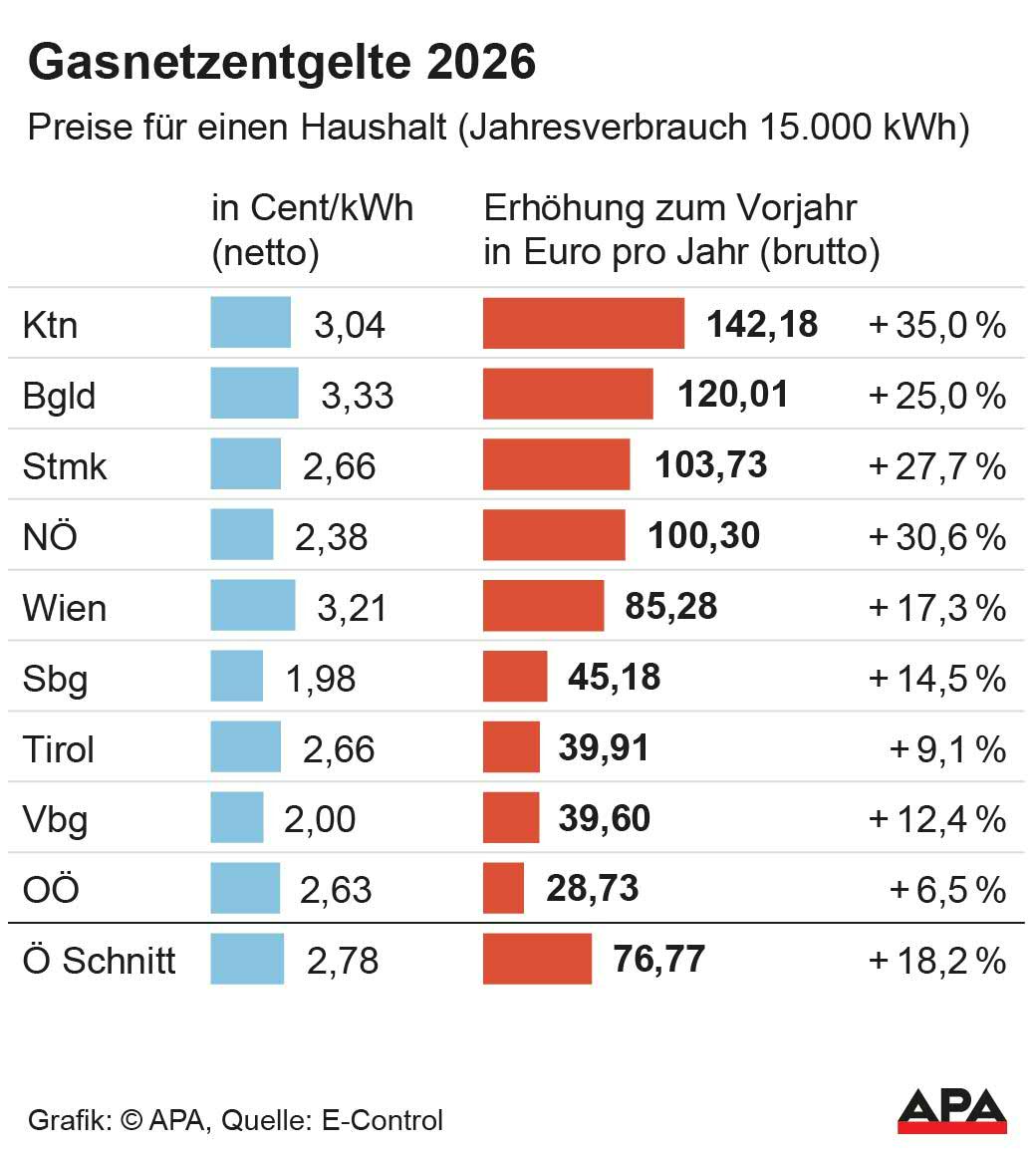
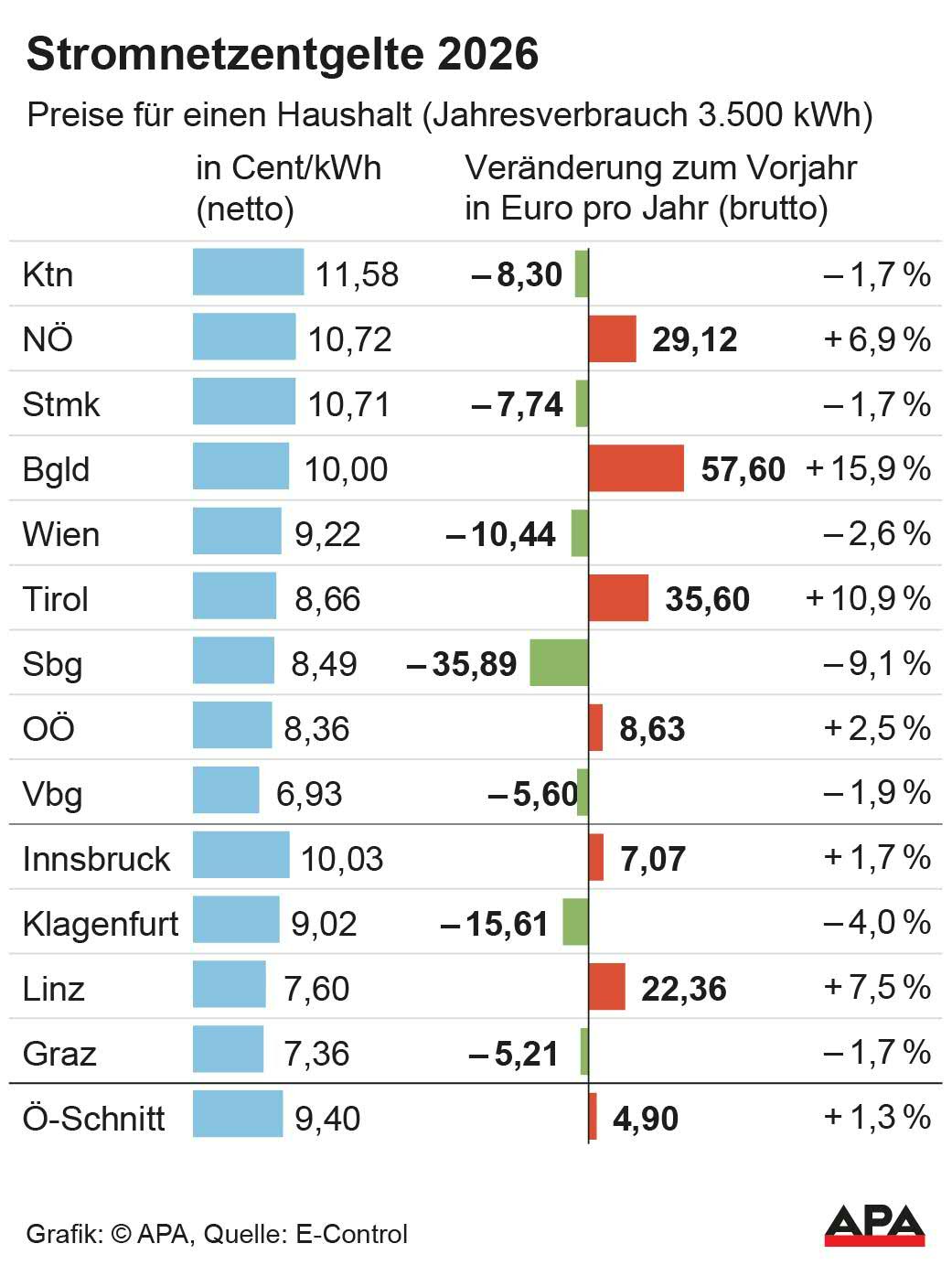
The new year brings lower electricity costs and higher gas network fees. For electricity, network tariffs will increase by an average of 1.3 percent on January 1, 2026. The reason electricity will still be cheaper for many is due to the new social tariff and the temporary reduction of the electricity tax. Next year, this will be only 0.1 cents per kilowatt-hour (kWh) for households instead of 1.5 cents. For gas, network fees will rise sharply again at the turn of the year, by an average of 18.2 percent.
Lower electricity costs and higher gas network fees from 2026
There are significant regional differences in both electricity and gas network tariffs, which are set annually by the energy authority E-Control. For electricity, they decrease slightly in Vorarlberg, Carinthia, Vienna, and Styria, and significantly in Salzburg. They increase the most in Lower Austria, Tyrol, and Burgenland. For gas, they increase the most in Carinthia, Lower Austria, Styria, and Burgenland.
New "Summer Sun Discount" and Social Tariff
In 2026, there will be a discount on network charges for electricity for the first time for those who consume electricity at midday in the summer, which is when a lot of photovoltaic electricity is typically fed in. The "Summer Sun Discount" of 20 percent on the network fee applies between April 1 and September 30 during the hours of 10 a.m. to 4 p.m. This Summer Low Work Price (SNAP) is automatically calculated, "provided the network operators have the necessary detailed data," as stated in the explanations of the regulation. In practice, this means that the quarter-hour values must be activated in the network operator's smart meter portal.
New Social Tariff from April 2026
With the adoption of the new Electricity Industry Act (ElWG), the way is also clear for the new social tariff. This is set to start on April 1, 2026. Beneficiary households - the 250,000 exempt from the ORF fee as well as several tens of thousands of unemployed and emergency assistance recipients - will then pay only 6 cents per kWh for the first 2,900 kilowatt-hours of electricity. This is a significant saving compared to the current market tariffs, which according to the E-Control tariff calculator, usually start at a consumption price of around 10 cents per kWh excluding taxes and charges.
Next year, the green electricity subsidy contribution will also be lower than in 2025. A typical household with a consumption of 3,500 kilowatt-hours of electricity will save approximately five euros in 2026.
(APA/Red)
This article has been automatically translated, read the original article here.
Du hast einen Hinweis für uns? Oder einen Insider-Tipp, was bei dir in der Gegend gerade passiert? Dann melde dich bei uns, damit wir darüber berichten können.
Wir gehen allen Hinweisen nach, die wir erhalten. Und damit wir schon einen Vorgeschmack und einen guten Überblick bekommen, freuen wir uns über Fotos, Videos oder Texte. Einfach das Formular unten ausfüllen und schon landet dein Tipp bei uns in der Redaktion.
Alternativ kannst du uns direkt über WhatsApp kontaktieren: Zum WhatsApp Chat
Herzlichen Dank für deine Zusendung.